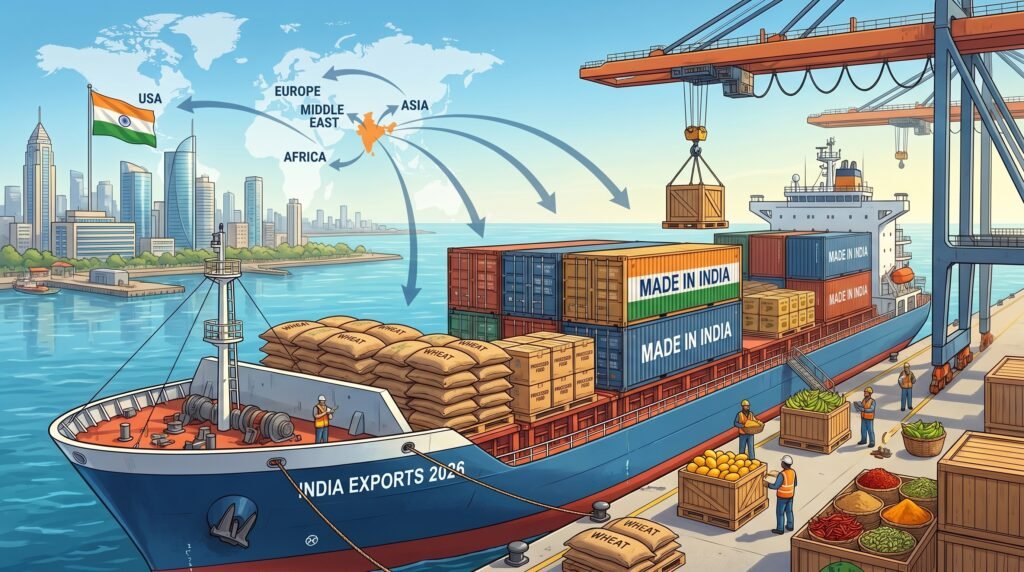
As of May 2026, India’s food export sector is entering a strong growth phase, supported by improved agricultural output, favorable government policies, and rising international demand. A major highlight of this resurgence is the resumption of wheat exports after a four-year gap, marking a significant milestone for the country’s agricultural trade.
The return of wheat shipments indicates stable domestic production and surplus availability. This has enabled India to once again cater to global markets, particularly in regions such as Asia, Africa, and the Middle East, where demand for affordable and reliable grain supplies continues to grow. This move not only boosts export revenues but also strengthens India’s role in global food security.
At the same time, the processed food industry is emerging as a key driver of export expansion. Products such as ready-to-eat meals, packaged snacks, frozen foods, and health-focused items are gaining popularity worldwide. Changing consumer lifestyles, especially in urban areas across the globe, are increasing the demand for convenient and high-quality food options. Indian manufacturers are capitalizing on this trend by enhancing product quality, adopting international standards, and investing in branding and packaging.
Another important contributor to export growth is the rising demand for niche horticultural products. India’s diverse climate allows for the cultivation of a wide variety of fruits, vegetables, spices, and specialty crops. Products like mangoes, bananas, organic vegetables, millets, and superfoods are attracting significant attention in international markets. These products not only offer nutritional value but also cater to the growing preference for organic and sustainable food choices.
Government initiatives are playing a crucial role in supporting this growth. Efforts to improve infrastructure, such as cold storage and transportation facilities, are reducing post-harvest losses and ensuring better quality exports. Additionally, policies focused on export incentives, digital trade systems, and farmer support programs are helping streamline the supply chain and increase efficiency.
Sustainability and quality assurance are also becoming central to India’s export strategy. With a growing emphasis on organic farming, traceability, and food safety standards, Indian exporters are building greater trust among global consumers.
In conclusion, the surge in Indian food exports in 2026 reflects a balanced and forward-looking approach. By combining traditional strengths like wheat exports with modern sectors such as processed foods and horticulture, India is positioning itself as a major player in the global food market.